GLAUCO SCHETTINI
About
I am a historian of early modern and modern Europe and the wider Catholic world. I study moments when religion and politics become impossible to disentangle: when old religious languages become modern ideologies, when revolutions unsettle inherited authorities, and when stories about hidden power help people make sense of change.
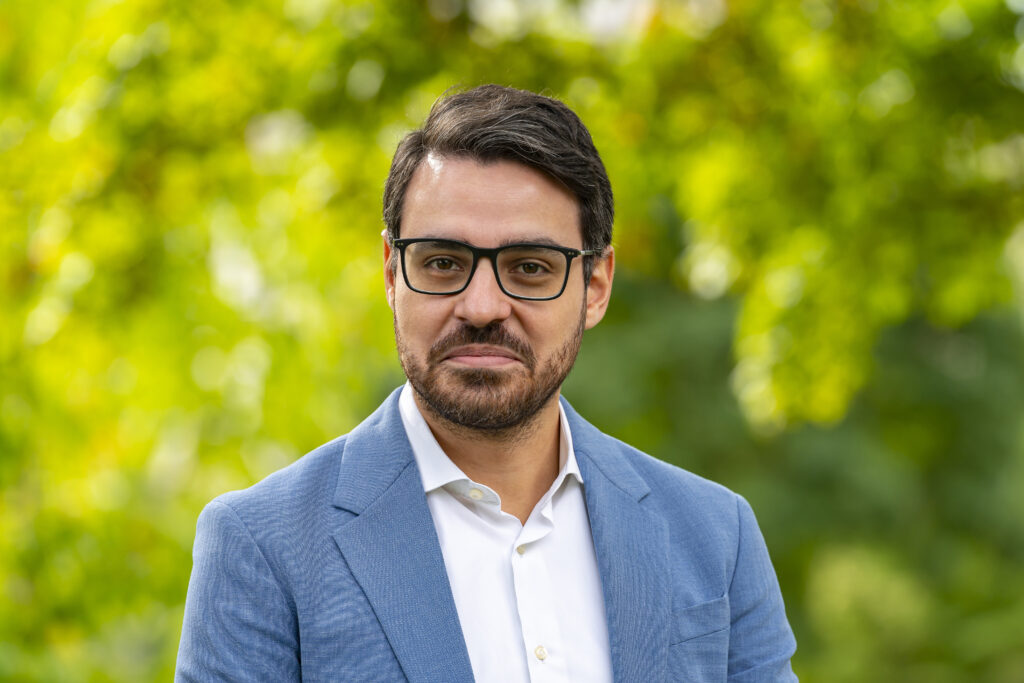
I am currently a Marie Skłodowska-Curie Postdoctoral Fellow in the Department of History at the University of Warwick. Before joining Warwick, I was a Visiting Assistant Professor in the Department of History at Haverford College and, before that, a Postdoctoral Associate and Lecturer in the Humanities Program at Yale University.
I was born in Rome to an Italian father and a Venezuelan mother. I earned BA and MA degrees in History from the University of Pisa while also completing the five-year diploma program in History at the Scuola Normale Superiore, a research-intensive institution founded by Napoleon and housed in a Renaissance palace in the heart of Pisa. At the Scuola, I received intensive interdisciplinary training and began doing archival research from my first year as an undergraduate. Those years first drew me to the political, intellectual, and religious culture of eighteenth-century Europe. In 2016, I moved to the United States to pursue a Ph.D. in History at Fordham University, where my work expanded beyond Italy and beyond the eighteenth century, becoming increasingly transnational and attentive to the longer histories of Catholicism and political thought.
My dissertation examined Catholic political thought in the Age of Revolutions. It received the John Tracy Ellis Dissertation Award from the American Catholic Historical Association and the Farrar Memorial Award from the Society for French Historical Studies. That project grew into my first book, The Invention of Catholicism: A Global Intellectual History of the Catholic Counterrevolution, 1780–1849, forthcoming from Oxford University Press in December 2026.
The Invention of Catholicism traces how Catholics responded to state reform, revolution, and new political ideologies by remaking their religion into a modern language of politics and society. Drawing on sources from across Europe and the Atlantic world, the book places Catholicism at the center of modern intellectual history and presents counterrevolution not simply as resistance to change, but as a creative force in its own right.
My current project, Power and Paranoia: A History of Conspiracy Theories, follows the making of modern conspiracy thinking from early modern religious polemics to the political obsessions of the modern age. It asks why stories of hidden plots become persuasive when familiar explanations fail—and how they turn anxiety, uncertainty, and mistrust into powerful ways of understanding politics and history.
Across my writing and teaching, I am interested in how people make sense of worlds that seem to be changing too quickly: religious traditions that adapt to new political languages, revolutions that overturn old certainties, and narratives of crisis that identify hidden enemies behind visible events. My published work has explored these questions through studies of Catholicism and counterrevolution, the French Revolution, the papacy, and the emergence of modern ideologies. In the classroom, I invite students to read works from antiquity to the present as both responses to particular historical conflicts and contributions to enduring debates about authority, freedom, faith, and what human beings owe one another.
At home, I share a lively household with my wife, our twin daughters, and a cat who still seems convinced she is my research assistant.