Teaching
At the end of a course, I often ask my students a question that once changed the direction of my own life: “What is the use of history?” I first encountered it in Marc Bloch’s The Historian’s Craft as a high-school student planning to study physics. The book helped make me a historian. At semester’s end, Bloch’s question gives my students and me a way to take stock: what can we now see that we could not see before? Which connections have come into view, which assumptions have become harder to sustain, and which questions have grown more complicated?
I have taught from the worlds of the Hebrew Bible and ancient Greece to the present, in history and philosophy, in lectures for a hundred students and around small seminar tables. The setting changes, but my aim does not: to make difficult material intelligible without making it simple, and to create a classroom in which students feel supported enough to take intellectual risks. I want them to leave my courses as more attentive readers, more precise writers, and more independent thinkers—able to follow change over time, test claims against evidence, and listen seriously to arguments they do not share.
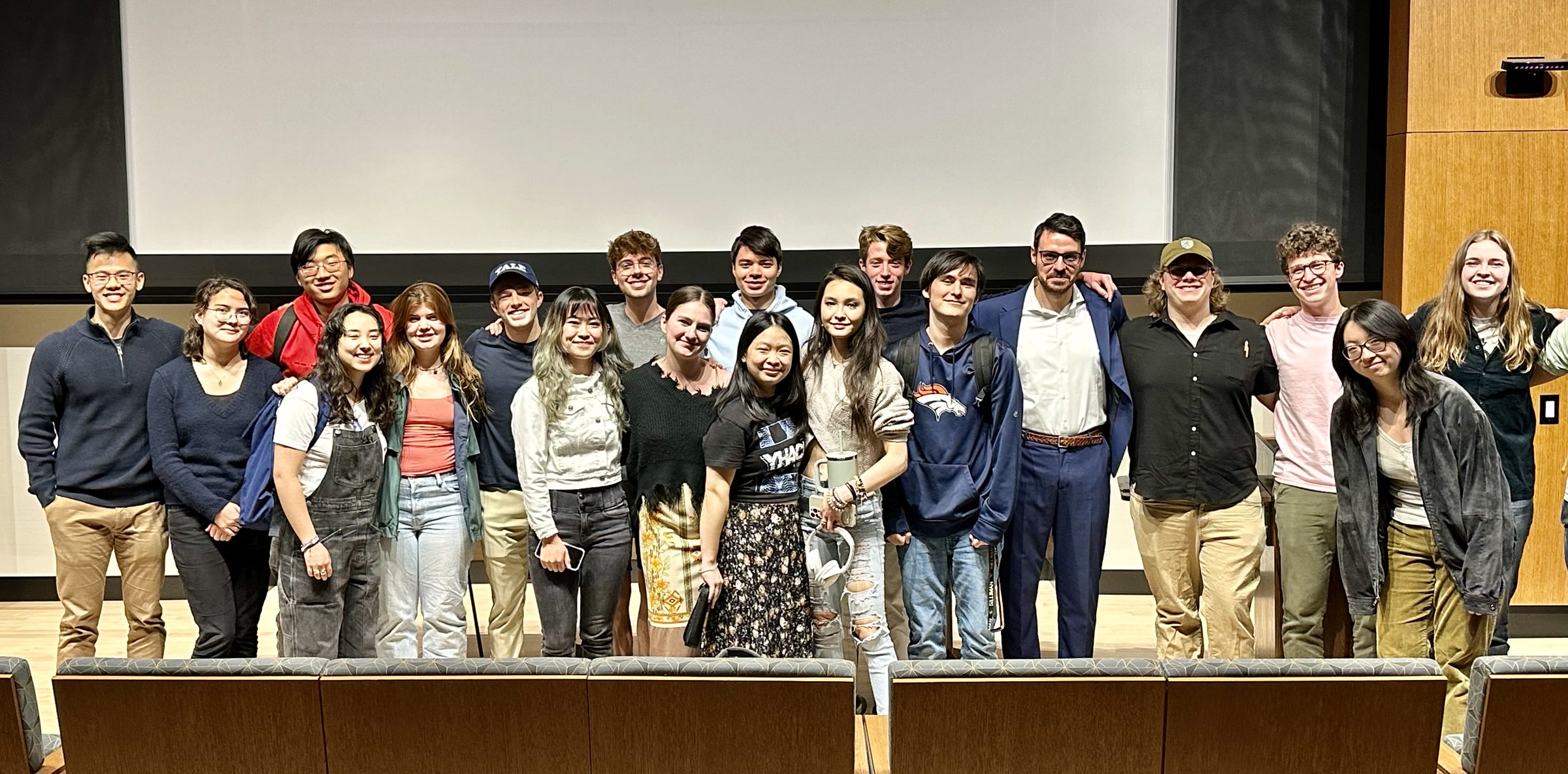
Making Difficult Ideas Legible
Some of the works I teach can be forbidding on first encounter. Before asking students to debate Aquinas on natural law, Kant on reason, or Kierkegaard on faith, I begin with the problem to which the text responded. What question was its author trying to answer? Which terms carry the argument? Where does one claim depend on another? A short framing lecture, timeline, diagram, or analytical handout can offer a point of entry. These materials are scaffolding, not substitutes for the work itself.
Once students have a foothold, I ask them to take on the harder interpretive work together. In seminars, I leave room for conversation to develop among students while helping them remain grounded in the text. In larger courses, I punctuate lectures with close readings, images, questions, and discussion. I want the classroom to be a place where students can admit that they do not understand, offer an interpretation before they are entirely certain of it, disagree seriously and generously, and revise their judgment without embarrassment.
Reading the Past in More Than Words
The people we study did not encounter their world as a reading list, and I do not want students to encounter the past that way. Alongside works of philosophy, theology, political thought, or history, my students read manifestos, sermons, newspapers, assembly proceedings, correspondence, and other records produced amid the pressures of political and everyday life. They also listen and look.
A discussion of nationalism might move between Mazzini’s manifestos, Verdi’s operas, and Chopin’s polonaises. A class on the crisis of reason around 1900 might place Nietzsche and Freud beside modern painting and the music of Debussy and Satie. I ask students to treat a political speech, an opera, a painting, or a devotional object as evidence in its own right: something created by historical actors, for particular audiences, that advances a vision of the world.
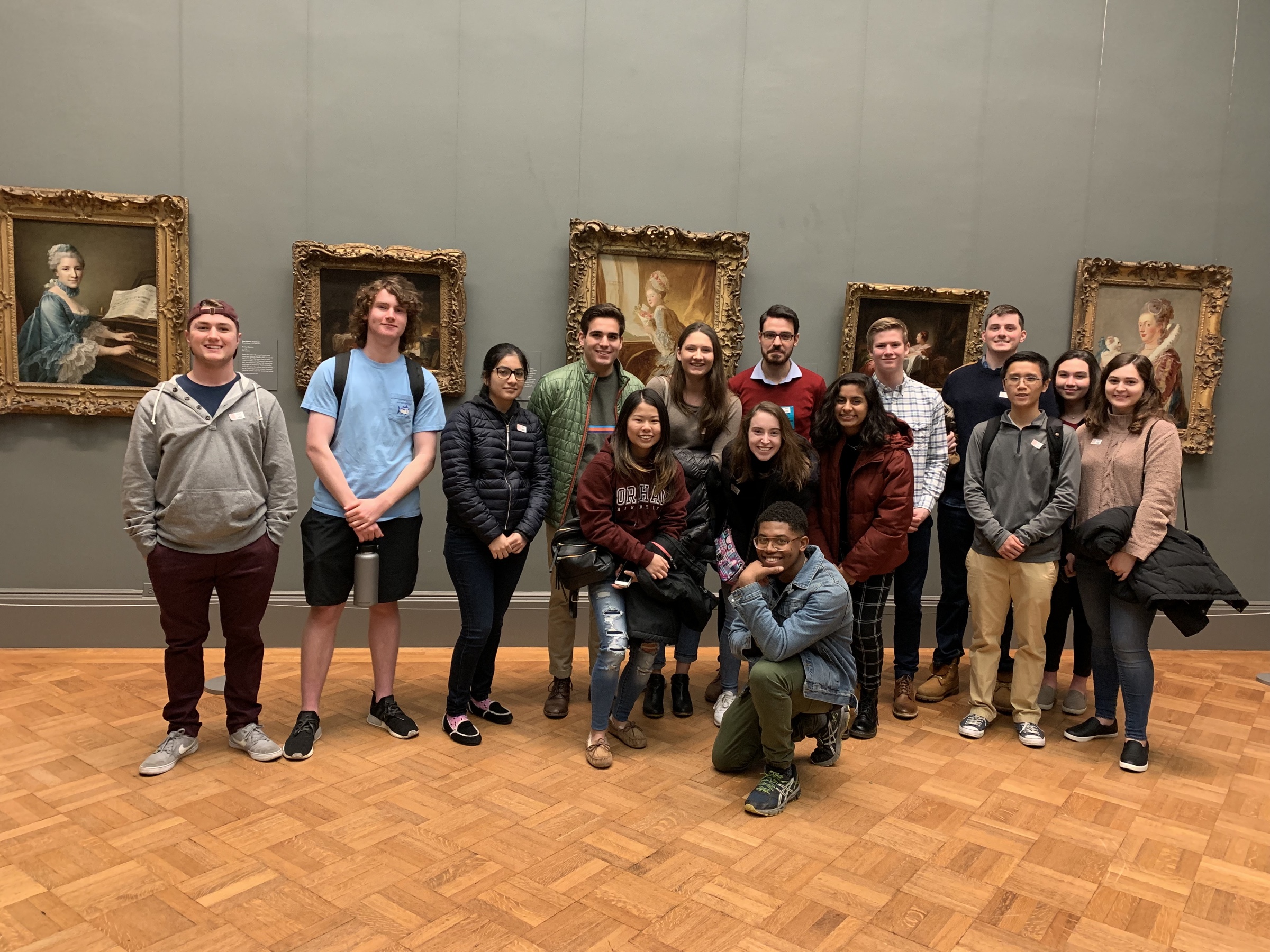
At Fordham, I brought students from my early modern Europe survey to the Metropolitan Museum of Art. I introduced paintings and objects connected to the course, and then we worked through them together much as we would a difficult text: noticing details, posing questions, testing hypotheses, and revising our interpretations as new evidence came into view.
Writing, Research, and Mentoring
Writing is not simply how I assess what students know; it is one of the ways they discover what they think. When I return a paper, I want my comments to give the student a next move. Rather than marking every possible weakness, I concentrate on a manageable number of consequential questions: what the argument is, how the structure supports it, what the evidence establishes, and where the prose can become more exact. Workshops, drafts, and office-hour conversations give students opportunities to put that advice to work.
A thesis often begins as an enthusiasm too large for a semester. At Haverford, I supervised projects on representations of sovereignty in early modern France, festivals as instruments of dynastic and monarchical legitimacy, the intellectual history of ballet, and the circulation of Chinese porcelain in eighteenth-century Europe and the meanings attached to authenticity. My role is not to supply the argument, but to help students find a question within a subject and a structure within a large and sometimes unruly body of evidence. I try to narrow a project without shrinking its ambition and to ensure that the finished work remains unmistakably the student’s own.
Some relationships outlast the course or thesis that first brought us together. Former students still send me drafts, ask for advice about research and applications, or return to conversations we began years earlier. Those continuing relationships—and the opportunity to watch students develop intellectual and professional lives of their own—are among the parts of teaching I value most.
Having learned to write academically in English myself and later worked as a tutor in Fordham’s Writing Center, I know how opaque scholarly conventions can initially feel. I try to make those conventions explicit without prescribing a single voice, helping students become confident researchers and writers who can explain both what they think and why it matters.
Selected Courses
My teaching ranges broadly in chronology, geography, discipline, and format. These courses represent three recurring forms of my teaching.
Broad Histories and Global Connections
Courses that trace large-scale historical change across centuries and regions:
- Caravans and Traders: Global Connections, 1200–1500 — University of Warwick
- Understanding Historical Change: Renaissance to Revolution in Europe — Fordham University
- Understanding Historical Change: Modern Europe — Fordham University
Texts and Intellectual Traditions
Close engagement with major works of historical, political, religious, and philosophical thought, extending from biblical and classical antiquity through the modern world:
- Directed Studies: Historical and Political Thought — Yale University
- Directed Studies: Philosophy — Yale University
Thematic and Research Seminars
Problem-centered courses in which students pursue sustained historical questions through primary sources, discussion, writing, and independent research:
- Revolutionary Ideas, 1770s–1840s — Haverford College
- Power and Paranoia: Conspiracy Theories in the Early Modern World — Haverford College
- Saints and Sinners: Europe’s Religious Worlds from the Reformation to the Death of God, 1500–1900 — Haverford College
- Human Rights in History: The Early Modern Period — Haverford College
What Students Say
“Professor Schettini is honestly one of the best teachers I have ever had. He created a kind and comfortable atmosphere in class and was visibly invested in student learning throughout the semester. He came prepared with materials to help guide us through arguments, always took the time to speak to us after class and answer any questions, and created fun and organic discussions every single class. I’ve never felt more welcomed and supported than I have in his class.”
Student, Directed Studies, Yale University
“Professor Schettini has a tremendous gift for teaching … He is a lucid explainer of complex concepts, a precise and penetrating instructor of writing, and a kind, devoted mentor. His feedback on my essays has incomparably benefitted my analytical writing.”
Student, Directed Studies, Yale University
“Professor Schettini always made sure that we would leave each lesson with some deeper understanding of the texts we had surveyed, and, given the particularly challenging nature of modern epistemological philosophy, I felt he did this not adequately well, but exceptionally so. Furthermore, his calm yet firm demeanor contributed to an environment where all students were encouraged to speak their minds freely and openly, admitting when they either did not understand something or had a difference of opinion from the rest of the class. I never felt intimidated nor bored in Professor Schettini’s class, a true feat given the daunting nature of the course material.”
Student, Directed Studies, Yale University
“Professor Schettini is the kind of professor who always appreciates the puns you insert into otherwise very serious papers; the kind of professor who comes to class with colored maps, detailed timelines that render even the most confusing of Roman eras easily understandable, and sometimes donuts; the kind of professor whose office hours should be renamed office days, because there is not a day of the week or hour of the day that he will not help if we ask. All that is to say, Professor Schettini is one of a kind.”
Student, Directed Studies, Yale University
“The feedback was always clear and helpful—never nitpicky, never too broad, always providing a few key paths forward for improving my writing and skills of historical analysis. Please maintain the feedback style as it is. It is unparalleled.”
Student, Revolutionary Ideas, Haverford College
“Professor Schettini is uniquely excellent. He masterfully balances serving as an educator, mentor, and interlocutor. Attending his section quite simply made me excited to arise on class days. The blend of student-to-student conversation he catalyzed and the provision of his own textual insights prompted my growth not just as a writer, reader or thinker, but as an understander, both of texts and others. Professor Schettini taught me how to listen by listening.”
Student, Directed Studies, Yale University