Historian of Religion, Revolutions, and Ideas
Glauco Schettini
I am a historian of early modern and modern Europe and the wider Catholic world. My work asks how religious and political ideas travel, gather force, and reshape public life—from conflicts over church and state to revolutions, counterrevolutions, and the stories people tell about hidden power.
I am currently a Marie Skłodowska-Curie Postdoctoral Fellow in History at the University of Warwick, after teaching at Yale University and Haverford College. My first book, The Invention of Catholicism: A Global Intellectual History of the Catholic Counterrevolution, 1780–1849, shows how Catholics across Europe and the Americas responded to the upheavals of the late eighteenth and early nineteenth centuries and, in the process, helped create modern Catholicism. I am now writing a history of modern conspiracy theories.
Featured Book
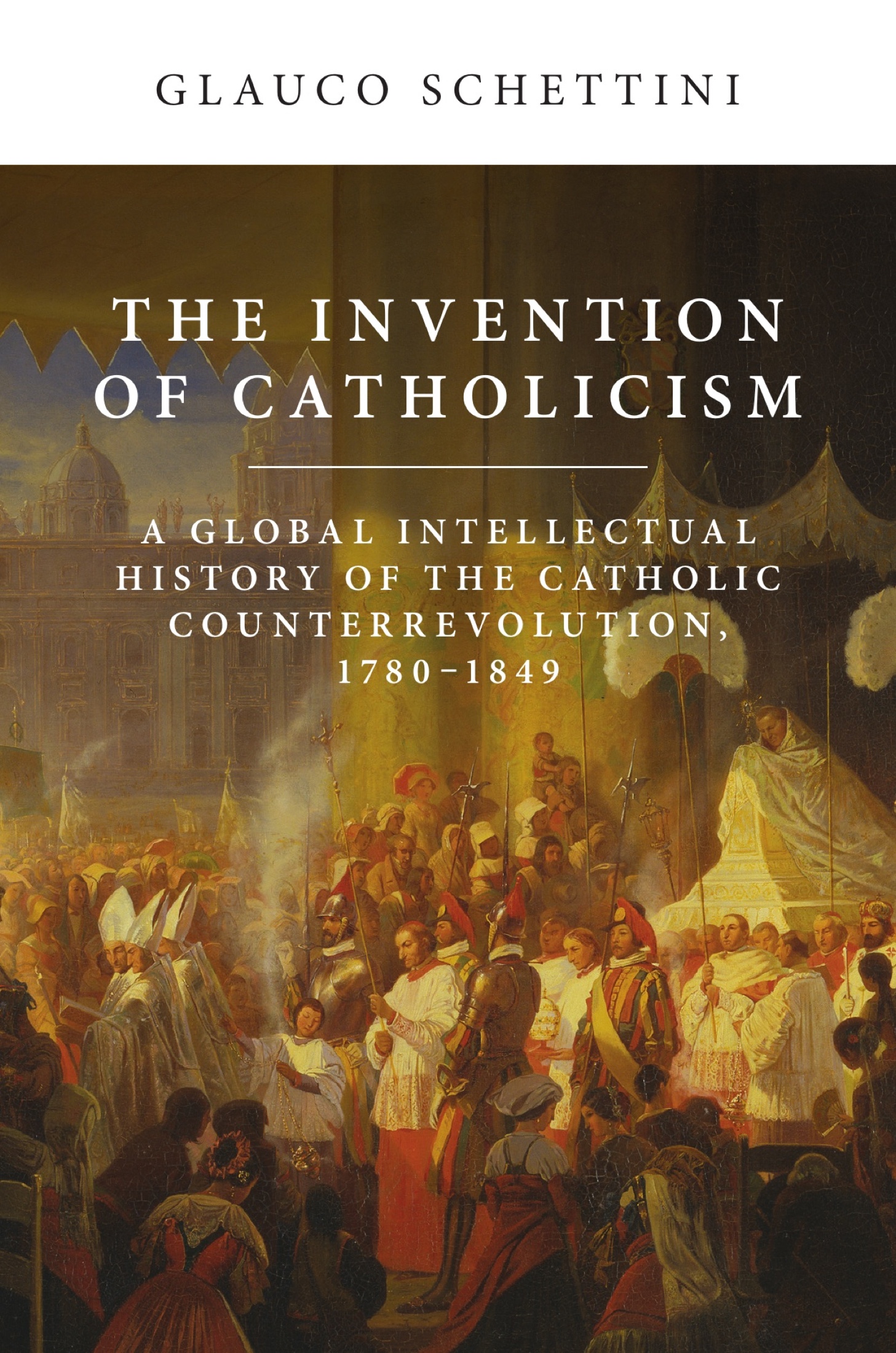
The Invention of Catholicism
A Global Intellectual History of the Catholic Counterrevolution, 1780–1849
The Invention of Catholicism tells a story not of religion’s disappearance, but of its reinvention. At a time when reforming states, revolutions, and new political ideologies challenged the old confessional order, Catholics across Europe and the Americas developed new ways of thinking about society, politics, rights, nationhood, and mass mobilization.
The book argues that Catholicism did not simply survive the Age of Revolutions: it was remade by it. In the process, it became a modern public and political force—one that competed with liberalism, conservatism, socialism, and nationalism in shaping the nineteenth-century world.
Current Research
My current project, Power and Paranoia: A History of Conspiracy Theories, traces the emergence and transformation of conspiracy theories in Europe from the seventeenth century to the present. It asks why stories of hidden plots became such powerful ways of making sense of political crisis, religious conflict, revolution, capitalism, and global change—and why they remain so difficult to dislodge.
Explore My Work
Publications
Books, articles, and chapters on Catholicism, revolution, political thought, and more.
Explore publications →Teaching
Courses on European and global history, religion, political thought, human rights, revolutions, and conspiracy theories.
Explore teaching →Events & Media
Lectures, interviews, public writing, and forthcoming book events.
Explore events and media →